Category Archives: Environment

Solid Shampoo Bars

What does shampoo have to do with a food blog?

Consider for a moment that skin is our largest organ, and it absorbs what we put onto it…

As you know, it is NOT easy to always do the right thing; it can take a lot of work and advanced planning. But what is the right thing anyways? Of course doing the “right thing” varies for each individual and it takes time for everyone to find their own way in this regard. But the sad truth, and perhaps an inconvenient truth, is that we are running low on time. Our planet, environment, beings and ecosystems are no longer able to bounce back from disasters and diseases as they once did. Our natural state of homeostasis is being overburdened by global pollution. Most of us are so busy getting through our day, dealing with our long list of duties and demands that we have fallen victim to the very notion of an easier way of life. We tend to do what is convenient for our life and not able to see how our disposable actions and choices affect the very fabric of our world. We have succumbed to living for the moment as opposed to learning to expand or stretch time to live in the moment.

Heavy…I know.

But there can be light. And I have got another really cool solution for you:

SHAMPOO!

All natural Shampoo in the form of a solid bar. Therefore, no bottle or cap required to dispose of or reuse and best of all no more clutter in the shower or tub! Water, lather, rinse, repeat if necessary. Voilà.
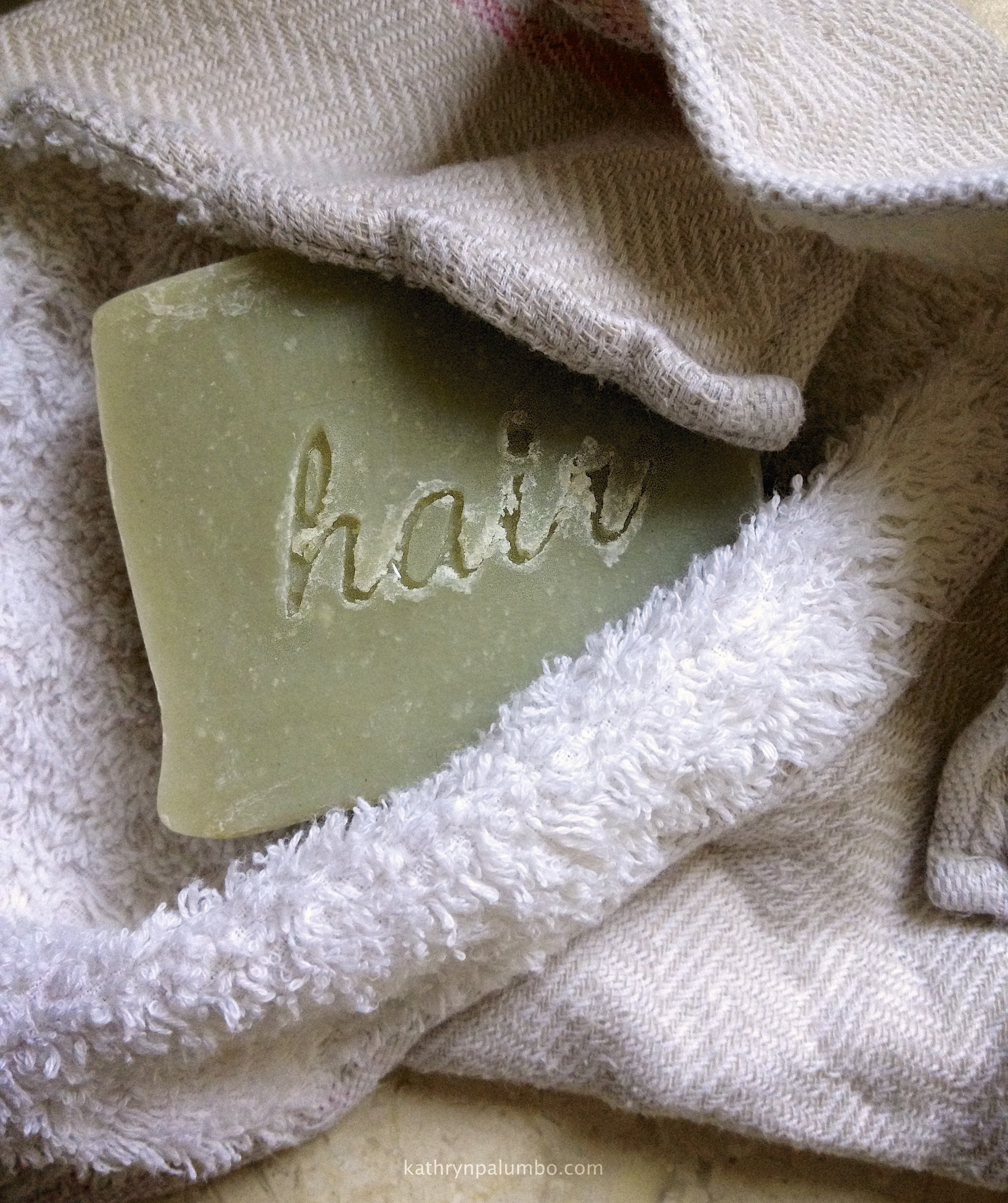
Shampoo Bar

When I shower away from home, I take my shampoo bar with me. I simply wrap it in a clean dry wash cloth and bring it home in the same clean dry wash cloth. I then unwrap it and let it air dry. Easy. I do the same with the body soap bars too. An interesting tidbit to know is that you can test out the shampoo bars on your body and clean both hair and body with the same bar. Double easy! However, I generally use the body bars for my body. AND I have a selection of bars which I use on a rotation, because I treat the outside of my body the same way I treat the inside of my body; by eating foods on a rotation therefore, attempting to not eat the same foods two or three days in a row.

Like with any transition there is a period of adjustment. And there is definitely an adjustment period when transitioning from shampoos loaded with chemicals. (More about the transition in an upcoming post). I have been experimenting using exclusively natural shampoo bars since December 2013. It is now just the end of April 2014 and my hair feels the best it has felt in years! With having very long hair, I used to use all the expensive salon formulated-clinically-tested shampoos; being sold on the idea that I needed to add other products that would hydrate my hair, even though I would cut it every nine to twelve weeks to keep the ends healthy. Interestingly, even after all these years of using different high-end products loaded with ‘formulas’ that would supposedly hydrate my hair etc., my hair was always getting a lousy report card (if it wasn’t the product that was flawed it was that I wasn’t using the products properly or often enough) and I would convince myself to try other products that the stylist would be raving about at the moment.

“If what you’re doing isn’t working, doing more of it won’t work any better.” -Alan Cohen

Suddenly, after four full months of only using these solid shampoo bars, the natural oils from my scalp have finally had an opportunity to be restored and do what they do best – protect my hair and keep it healthy without chemicals.

Oh, the irony. Adding chemicals to our hair to make it soft and manageable meanwhile polluting our body and waterways? And it seemed to me that by using those “professional products” only made me need to use them more. My hair needed to be washed more often as a result. Now my hair can go longer without needing to be washed and seems to look better with each day as my natural oils do what nature intended. The only reason I wash my hair every two or three days is because I swim, otherwise I would wait longer.

The first ever shampoo bars that I tried are made by Cory Trusty, in Florida USA at Aquarian Bath. If you visit her site you will see all the other products she makes. These bars lather very well and can last. I haven’t counted how many washes I can get out of a bar, but it is a lot, when *stored properly. My kids tend to hold the bars under the shower which causes the bars to disintegrate quickly; it’s not easy getting kids to follow instructions especially where water and bubbles collide.

I have tried all of these Aquarian Bath products: body soap bars, solid lotion bars, tooth powder, solid deodorant balm. I am so satisfied with the quality, ingredients and results that I have even started to make my own solid lotion bars from a kit (recipe included) that Cory sells on her site.

Be a spark | Inspire change | Give each other time to find our own way.

Here are some photos of my hair having only been washed with a natural shampoo bar. My hair dries much faster and is nearly completely dry needing only two minutes under the dryer during winter months. It will be interesting to see how my hair responds during warmer more humid weather.

3 days since

3 Days since last hair wash

After

Same day, after hair wash

After

2 days later

There is a lot to describe about hair texture during the transition to natural bars, and so on…but I will save that for another post. Think you are ready to try Shampoo Bars for yourself? Aquarian Bath is giving away 2 Shampoo Bars to one lucky person in any country. Read Terms & Conditions.

Congratualtions to Paul

Wins 2 Shampoo Bars generously provided

by Aquarian Bath!

Contest is now OVER a Rafflecopter giveaway to enter to win

2 Vegan Shampoo Bars from Aquarian Bath

(Carrot Top Shampoo Bar & Key Lime Eucalyptus Shampoo Bar)

*How to store solid shampoo bars? Don’t leave them in a wet or humid environment where water will cause them to disintegrate. Use cedar soap decks. Once my bars have air dried, I store them in an open box. I love it, it keeps my shower floor free from the clutter of bottles. Ah! Minimalism.

Related Article:  How to wash your hair without shampoo Explains what store bought shampoo is made from and what it does to your hair.

Next post: What to expect when using Shampoo Bars

Coming Soon: Q & A with La Coco Bella
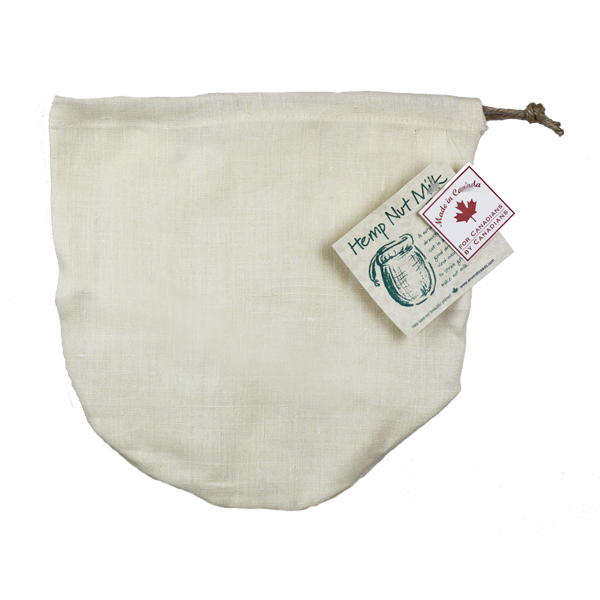
Reusable Kitchen Strainer-Bags

Nut Milk Bag

I like the idea of finding ways to reduce the amount of single-use anything I use each day, with the hope of not contributing to our already overburdened landfill destination.

Did you know?

Not only does it take a lot of energy (human and fossil fuels etc.) to transport our garbage to landfill but also an enormous amount of resources to maintain landfills; in some places for as long as thirty years. New landfills collect the global warming greenhouse gasses: methane and carbon dioxide, that are produced from the slow decay of garbage with the intention of using them for industrial/energy purposes. Collecting those hazardous gasses is a big job, perhaps if we all did our part it could be a job that need not exist.

Landfills are configured with special pipes that collect leachate*. If leachate seeps through liners, or from developing cracks, the leachate eventually finds its way into surrounding ground water, wet lands, rivers and lakes. Thus polluting the natural resources our entire ecosystem depends on.

Did you know that most old landfills did not prevent leachate from entering our environment?

Knowing this is definitely depressing, but realizing that we CAN, at an individual level make a difference each day by not contributing to landfill is very uplifting!

A simple reusable item is the Strainer-Bag or Nut-Milk Bag. I have a few which I dedicate to certain jobs in the kitchen.

  • For making Nut Milks (the same bag for Almond Milk, Coconut Milk, Hemp Milk, Rice Milk)
  • A different bag reserved for making Soy Milk
  • For straining stocks (the same bag for Chicken or Beef Stocks)
  • A different bag for straining Fish Stock
  • A different bag for straining Vegetable Stock

I don’t always use the strainer-bag every time I make stocks, and on those occasions, I will simply run the stock through a very fine wire mesh sieve. The strainer-bag/ nut-milk bag ensures a very clear stock.

I don’t use plastic strainers/ sieves or nylon bags because I don’t like the idea of the food I am eating to be in contact with those substances. If I am to bother going the distance to prepare organic homemade food, milks and stocks, I think it is wise to consider the quality of the utensils and cookware used in preparing the food as well.

I also don’t like the idea of using paper-based products to strain my stocks, because there is a lot of chemicals that are associated with paper products, besides the fact that they are a single-use product.


*Leachate is a liquid that forms from the collection of “rainwater that trickles through a landfill [combining] with harmful chemicals and other particles from the rotting waste.”  Source: EcoKids


Envirothreads is a Canadian company based in Lindsay, Ontario. They make their products from various cotton textiles including certified organic cotton, unbleached and printed cottons, hemp as well as bags made from post consumer polyester (made from recycled plastic bottles).


Related video: Unwasted. The Future of Business on Earth (Full length documentary)

Businesses around the globe produce nearly as much waste as they do product — almost 110 million tons annually in the US alone. Washington State spent more than 500 million dollars on waste disposal, recycling, and composting in 2009. But what is the real cost to business and the community?

Filmed between Spring and Summer of 2011, “Unwasted” is a look at businesses and organizations in and around the Puget Sound who are leading the way toward a less wasteful, more profitable and environmentally sustainable society.

Sage Environmental Services is pleased to bring this project to you. For information on screening, obtaining a copy or learning more about the project & the team behind it, visit: http://www.sagebug.com


Rubber Bands

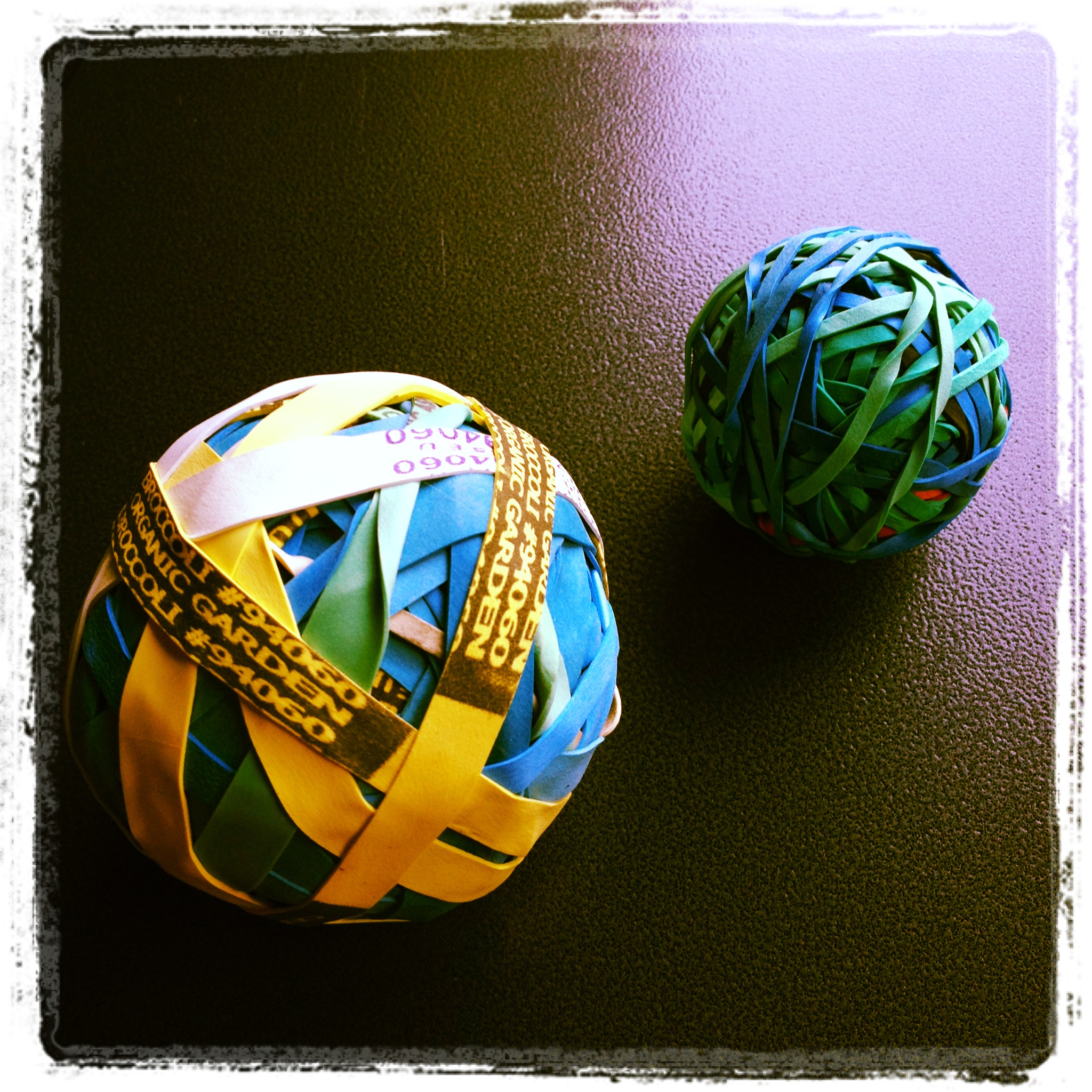
Big & Little Rubber band balls

What do you do with all the rubber bands you collect in a day? Maybe you have never thought about rubber bands before? In an attempt to cut back on what I put into landfill, with each day I become more aware of all the very minute details which contribute to the ‘stuff’ I throw away.
The rubber bands that I inadvertently collect, are generally from the grocery store, holding my organic produce together or sometimes the newspaper that is delivered to the house has one (or two?) to keep it folded; when its not sealed in a compostable plastic bag. I can’t think of any other instances whereby rubber bands sneak their way into my home.

Lettuce w/ rubber band

I can always find a use for something with elastic properties. I have used wide ones around stubborn lid caps to get a better grip in order to open them. However, I’ve lately turned to using my rubber kitchen gloves for that job.

So, while at this point I haven’t been able to completely eliminate rubber bands from entering my life, the one thing I can do is to make sure that they don’t go into the landfill while they still have a use. Over the years I started wrapping them into a ball and keep them in a handy kitchen drawer. I remember the day I showed my two young kids at the time, my super bouncy rubber-band-ball; with wide eyes they were speechless for the two seconds it took the ball to bounce on the ground and soar into the air, followed by shouts of joy and pleads to do it again. That was a great moment!

Here is story about Zack Hample who has been building his rubber band ball since the age of four. Now, after 32 years of adding to his ball it has grown immensely and weighs in at over 250 pounds. What probably started as a use for household or found rubber bands, turned into a lifelong hobby. Though it appears as though he purchases new rubber bands for adding on to his very large rubber ball.

Little Rubber Band Ball
Here are some ways to reuse or recycle rubber bands:

  • Donate Rubber Bands to a local school
  • To grip a slippery surface (jar lids, or put around shampoo bottles etc. making them easier to grip when wet).
  • Add rubber bands to hangers
  • A temporary fix for a leaky pipe until a plumber arrives.

How do you reuse your rubber bands?


Essential Kitchen Tool: Washable China Marker

KAT_3421

How can a washable China Marker be essential to the kitchen, you ask?

Eliminating single-use plastic from my life is a serious on-going challenge. Remembering to bring my reusable cloth grocery bags to the grocery store was the first step; how many times did I have to experience the pang of ‘doh’ as I would reach the checkout before my behaviour changed?

Oh, how one thing leads to another. From there I moved on to eliminating plastic food storage containers from my kitchen, pantry and for keeping leftovers. Simultaneously, I suddenly became aware of how the foods I chose from store shelves were packaged; almost all in plastic, even the ones contained in nice ‘earth-friendly’ boxes had plastic sealed sleeves. There were moments when I felt frozen in time, standing there in the grocery aisles, as shoppers would go whizzing around me grabbing items for their carts. I realized that I couldn’t just grab and go like I used to. I am now at a point where I don’t even bother going down certain aisles based on packaging. Funny, it used to be I only avoided products because of the listed ingredients. One change sure does lead to another. Back then, a part of me had woken up to the effects of the choices I was making — the short-term and long-term effects on my health and the health of my family. Before then, my focus had been so narrow, I was so caught up in cautiously selecting the most nutritious and organic ingredients, that I had been oblivious to the effects single-use packaging would have on the product contents (and thus ironically on our health) and on the health our planet, both in production and landfill/ waterways.

Healthy beings require healthy soil, air, oceans and planet in its entirety.

We cannot have one without the other.

To make a long story short(ish), one of the most essential kitchen tools that I have come across is the China Marker. It simplifies my effort in repurposing glass jars or using air-tight stainless steel food safe containers in the kitchen. In my transition to being less wasteful in the kitchen I started writing labels and dates on bits of masking tape and re-using them until I got annoyed with that solution; realizing that it wasn’t much of a solution because the masking tape eventually ended up in the garbage. I knew that there had to be a better way and that is when I happened to see it mentioned on Life Without Plastic’s site. Next was to track down the China Marker, which was easy: art supply store. It is wax based, and writes especially well on the outside of warm leftover containers prior to refrigeration. It doesn’t mark as well on cold jars, it helps to first warm up the writing surface with the heat of your palm.

IMG_9171

And when it comes time to wash the writing off, simply soak in warm/hot soapy water and rub. It generally won’t just wash away in the dishwasher.

Do you have any kitchen tips to share that can help us to reduce or eliminate daily single-use plastic waste?