Tag Archives: Plastic-free

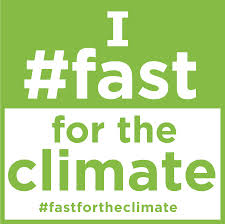
#Fast For The Climate

FastForTheClimate

After learning about Fast For The Climate from Cory at Aquarian Bath, it didn’t take more than a second to decide that I would join this “movement of youth, environmentalists and people of faith [who] are showing their strength of commitment by going without food once a month to call for world leaders to do more to solve the climate crisis.” ¹

I decided that I would stand with the fasters. My first Fast will be Wednesday October 1, 2014.

The idea of fasting on the first day of each month appealed to me on a few levels. Firstly, because I already practice compassion and self-discipline: when, on occasion, I hear my inner voice announce that I need a treat or something sweet, I think about mother’s like me who may be four blocks away or hundreds of thousands of miles away, living in poverty who don’t have the luxury to casually escape into indulgence. Thinking about those mothers snaps be back into reality and gives me strength to not give in. It strengthens my resolve to both take better care of my health and environment. Therefore, going forward, I can Fast For The Climate on the first day of every month.

“To bring climate change under control we need to exercise self-control, we need to act together, fasting enhances our focus and determination.”

Secondly, on a regular basis, I think about the impact products of modern commerce have on our climate. The shipping, manufacture including pre-production and post-consumer waste of products, which affect everyone but mostly affect those living in poverty. Can each of us be more mindful about our needs versus our wants? I can practice making less garbage, which means being more mindful about not buying products that come in plastic or single-use disposable packaging. I can forego that chocolate that comes in single-use packaging even though it can be recycled, I know that recycling is something that should be practiced as our last resort but has become a way of justifying selling and buying more products.

Lastly, I think about the ingredients of man-made products. What are these ingredients made from? Are they processed? The mere act of processing creates by-products which need somewhere to go and often end up in landfill or polluting our waterways. If we are consuming products that are highly processed, then our health declines. As our health declines we become dependant upon pharmaceuticals which eventually enter our water ways therefore contaminating the very water systems that support life. Think global numbers here and think about how many pharmaceuticals the average person from North America alone is prescribed. Now think about our water quality. We can change this.

It should be everyone’s goal to practice eating real, unprocessed food and to not eat “products”. We should prepare our own food, which is very different from assembling ingredients that are ready-made store bought ‘products’. We need to change our behaviour from eating on the go with the belief that we can swallow our nutrients in liquid form while multitasking. We need to join the slow food and plastic free movements to ensure a happy healthy civilization (including all beings) on an equally healthy planet.

“To keep in health this rule is wise.
Eat only when you want and sup light.
Chew well, and let what you take be well cooked and simple.

He who takes medicine is ill advised. Beware of anger and avoid grievous moods. Keep standing when you rise from table. Do not sleep at midday.  Let your wine be mixed (with water), take little at a time, not between meals and not on an empty stomach.

Go regularly to stool. If you take exercise, let it be light.  Do not be with the belly upwards, or the head lowered; Be covered well at night.  Rest your head and keep your mind cheerful. Shun wantonness, and pay attention to diet.”

-Leonardo da Vinci, excerpt from Notebooks pg. 263

Can you imagine what Leonardo da Vinci would say about our global climate crisis?

“A nonviolent protest against wanton disregard for the natural world,
And a spiritual affirmation that we are all part of that world,
Responsible for its careful tending.” – Fast for the Earth

¹ Fast For The Climate

You can subscribe (upper right corner) to receive future posts via email. I will post “Reflections on My First #fastfortheclimate by the end of the week. I will share what my kids think of this and how I can include them without having them Fast.

Related articles: 

Why I’m Fasting for Action on Climate Change by Cory Trusty 

Reflections on My First #FastfortheClimate by Annie Levy of Kitchen Counter Culture

We eat too much. And produce too much waste.

“Eat Food. Not Too Much. Mostly Plants.” – Michael Pollan

I have started to practice thinking about everything, all the time. It’s great fun!

Cause and Effect

I practice thinking about the consequences of how all my actions, decisions and choices impact everything – literally from start to finish (from inception to decomposition). It seems a little odd to announce this doesn’t it? Especially since it should be a commonly practiced characteristic. Sadly, somewhere along the way of improving and making life easier we have been hypnotized by fast food (including healthy fast food!) and convenience merchandizers to believe that we are just too busy to think for ourselves…they want to think for us – and they have been. The result has been a disservice to our health and planet. Using the power of subliminal messaging via visual media and sound bites, we are being convinced of what we want and need.

From real product labels:

“Knowing the busy lifestyle of today’s families and the difficulty to make confident healthy food choices, [name withheld] brings these READY-TO-USE cooking stocks to Canada.”

It is so easy to make homemade stock which don’t require single-use disposable packaging.

“I know it can sometimes be challenging to eat right, especially when you’re on the go. That’s why I’ve created my line of healthy foods – so you can enjoy wholesome, tasty snacks even with your busy lifestyle…”

That come in single-use disposable plastic packages.

Thinking about cause and effect – from start to finish.

It seems to me that when we do something or create something, for the sake of our planet and for the benefit of all inhabitants that we need to consider in detail, from inception to decomposition the consequences of our actions.

Wind Turbines

For example: The incredible wind turbines. 537,000 Birds died at wind farms last year (including 83,000 raptors) in the U.S. alone and additionally it is estimated 888,000 bats were killed.

Were the details from start to finish properly or efficiently taken into account when designing these wind turbines? Perhaps the only consideration was how to create natural energy.  Producing clean power is fantastic, but causing hundreds of thousand deaths in the process is like blood energy.  How to create clean power without blades? Perhaps someone should ask James Dyson.

James Dyson

Yogurt fiasco? Whey Too Much: Greek Yogurt’s Dark Side

Greek yogurt’s acid whey by-product that is toxic to the environment and kills aquatic life has nowhere to go. Large-scale manufacturers are shipping it to farmers who feed it to their cattle (though the cattle can only tolerate a certain amount in their feed). Maybe we need to rethink the necessity of this yogurt rather than working on ways to turn the by-product into something else to ingest. Do we really need another sweetener syrup and would you really want to feed your baby infant formula made from this?

Cooks make meals from real food. Food scientists make ingestible substances disguised as food from by-products. By-products are the waste generated from processing. Think about what you are eating. Choose breast milk for babies. Choose naturally grown produce and if you eat meat, eat it in moderation from farmers who don’t feed their animals by-products! Grocery aisles with more meat than will be bought covered in plastic just for our convenience. We need to fix this.

I think of Marcella Hazan whenever I walk through the meat section at the grocery store. She was a self-taught American-Italian cook who having grown up in Italy had never stepped foot in a grocery store and prepared farm fresh poultry. When in American supermarkets, she came across chicken wrapped in plastic; she said it was unnatural, like they were in a coffin.

So many questions surface from such simple inquiry. Simple things such as buying milled flour, packaged in plastic.

flours in plastic

  • How does the plastic negatively affect the flour that I will be consuming?
  • How is the plastic package made in the first place?
  • What is the environmental impact that goes into making the plastic?
  • Where does the plastic wrapper go once I’ve used up the flour? Landfill? Waterways and ocean?
  • Where does the plastic wrapper go if I choose to recycle it with other plastic bags?
  • How much energy and water does it take to recycle plastic in the first place?
  • What does recycled plastic get turned into?
  • Isn’t turning recycled plastic into more plastic pointless?
  • I think I’d rather mill my own flour or buy from local farmers who package their flour in paper.
  • Paper packaging uses a lot of natural resources too, but it’s a step in the right direction.
  • Maybe I should re-think what I need flour for?
  • Am I eating more food than my body requires for optimum health?
  • Do I really need to make this much food?
  • Do I really need a treat? Especially every single day?

And so on…

I am trying to live a more Proactive Life. Being proactive is defined as: creating or controlling a situation by causing something to happen rather than responding to it after it has happened.


 It is easier to prevent disease than it is to cure disease.

This example would apply to both human and environmental disease.

These are some questions I have started to ask myself daily about everything in which I come into contact (not just flour!). I think about clothes, shoes, cars, bicycles, athletic gear, art, dishes, appliances and the list goes on.  How these items are manufactured and what will go into maintaining these items? Dry cleaning? Can the items be repaired when broken? How long will the items last? Where will these items end up when either they break or I don’t need them anymore? And yes, at times thinking like this has a somber effect on me, which is all the better, because that’s when I know that I can change. That’s when I wake up a little more and become more aware of my actions. The sadness I feel when I come to the realization: “What have I done? And “What am I contributing to?” This daily activity towards becoming proactive has helped me to come up with more constructive answers, which sit better with the person I effort to become.

“Do no harm & leave the world a better place than you found it.”

– Patricia Cornwell

I think about where my food comes from. Do you eat foods that are processed, which require opening a factory sealed bag or container to eat or cook with it?

I think about buying products from local farmers. But I take into account how those local farmers relate to the land; are they practicing sustainable agriculture? Do they practice food safety, equitable employment? Do they consider their environmental imprint from start to finish? How is their product delivered to store shelves? What’s the point in buying organic produce if it is covered in plastic?

Simultaneously, I think about how I cook the food that I buy. What kind of waste do I create in the process of making meals? How much aluminum foil do I use? I’ve read that cooking with foil at certain temperatures is not safe because the aluminum leaches into the food! I have cut down on re-heating food in the microwave and never use it for cooking.

“Think, think, think.”

– Winnie-the-Pooh


Eat Food.

Not Processed or By-Products. Not Packaged.

-Kathryn Palumbo


Note: I wrote to Bob’s Red Mill asking if they would consider repackaging their products in paper. In the meantime I am buying local flours that come in paper or from bulk.